
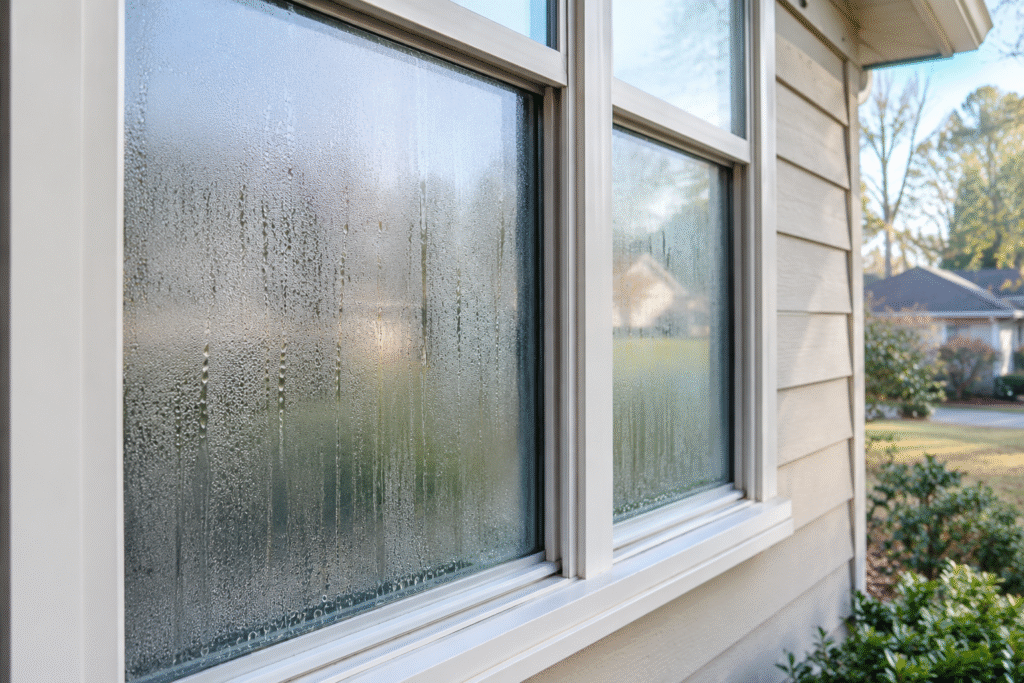
Why Do Insulated Glass Units Fog Up in Atlanta Homes?
If you’ve noticed a hazy film or moisture trapped between the panes of your window, you’re not imagining things. Insulated glass units are designed to last for decades, but Atlanta’s swings between humid summers and cold snaps can push them past their limits faster than you’d expect. Here’s what’s actually happening inside your windows, and what you can do about it. What Are Insulated Glass Units, Exactly? Insulated glass units, often called IGUs, are made of two or more panes of glass with a sealed air space between them. That gap is filled with air or an inert gas like argon, and it acts as a buffer that keeps outside temperatures from transferring straight through your window. The seal around the edge of the unit is what holds everything together and keeps moisture out. When that seal is intact, your windows stay clear and your energy bills stay lower. When it fails, the whole system breaks down. Why Do Windows Get Foggy? Foggy windows happen when the edge seal on an insulated glass unit cracks or weakens. Once that seal is compromised, humid outside air sneaks into the space between the panes. That moisture has nowhere to go, so it condenses on the inside of the glass, creating the cloudy or streaky look you see from your living room. In Atlanta, this process speeds up because of our climate. Hot, sticky summers followed by cooler, damper months put constant pressure on window seals, expanding and contracting the materials over and over. Over time, that stress adds up. What Causes Double Pane Glass Failure? A few things typically lead to double pane glass failure: Age. Most seals are rated to last 10 to 20 years. Once a window passes that mark, the risk of failure climbs. Poor installation. If a window wasn’t installed with the right flashing or sealant, moisture can find a way in much sooner than it should. Extreme temperature swings. Atlanta’s shift from 95-degree afternoons to chilly winter nights puts a lot of expansion and contraction stress on the glass and the seal holding it together. Manufacturing defects. Occasionally, a unit simply wasn’t sealed correctly at the factory, and it fails well before its expected lifespan. Once a seal fails, fogging usually isn’t a one-time event. It tends to come back, sometimes worse, because the gas fill that once insulated the unit has likely escaped too. Can You Fix Foggy Windows Without Replacing the Whole Window? Some companies advertise a fix that involves drilling a small hole into the glass to let the moisture evaporate. This can temporarily clear the fog, but it doesn’t restore the insulating gas or repair the broken seal. The fog almost always returns, often within a few months. The more permanent solution is IGU replacement, swapping out just the glass unit itself while keeping your existing window frame. This is usually more affordable than a full window replacement and gets your energy efficiency back on track. Is IGU Replacement Worth It? In most cases, yes. Replacing the insulated glass unit resets the clock on your window’s performance without the cost of a full frame replacement. It’s especially worth considering if: For homes with multiple aging windows or frames that are warped, cracked, or drafty, a full replacement might make more sense long-term. A quick inspection can tell you which route fits your situation. Frequently Asked Questions Why does only one window in my house look foggy?Seal failure usually happens one unit at a time. Sun exposure, installation quality, and even the direction a window faces can all affect how quickly its seal breaks down, so it’s common for just one or two windows to fog before the others. Does a foggy window mean I’m losing energy efficiency?Yes. Once the seal fails, the insulating gas between the panes escapes, and the window loses much of its ability to block outside temperatures. You may notice higher heating and cooling costs as a result. How much does replacing an insulated glass unit cost compared to a full window?IGU replacement is typically less expensive than a full window replacement because you’re keeping the existing frame. Exact pricing depends on the window size, glass type, and any upgrades like Low-E coatings. Ready to Clear Up Your Foggy Windows? Foggy windows are more than an eyesore. They’re a sign that your home is losing the energy efficiency you’re paying for. If you’ve spotted cloudy glass anywhere in your home, don’t wait for it to spread. The team at Lone Star Glass can inspect your windows, confirm whether IGU replacement or full window replacement makes the most sense, and get your view (and your energy bill) back to normal. Schedule your free consultation today. Posted on September 19, 2026 | Published by Ignite Local | Related Local Business