
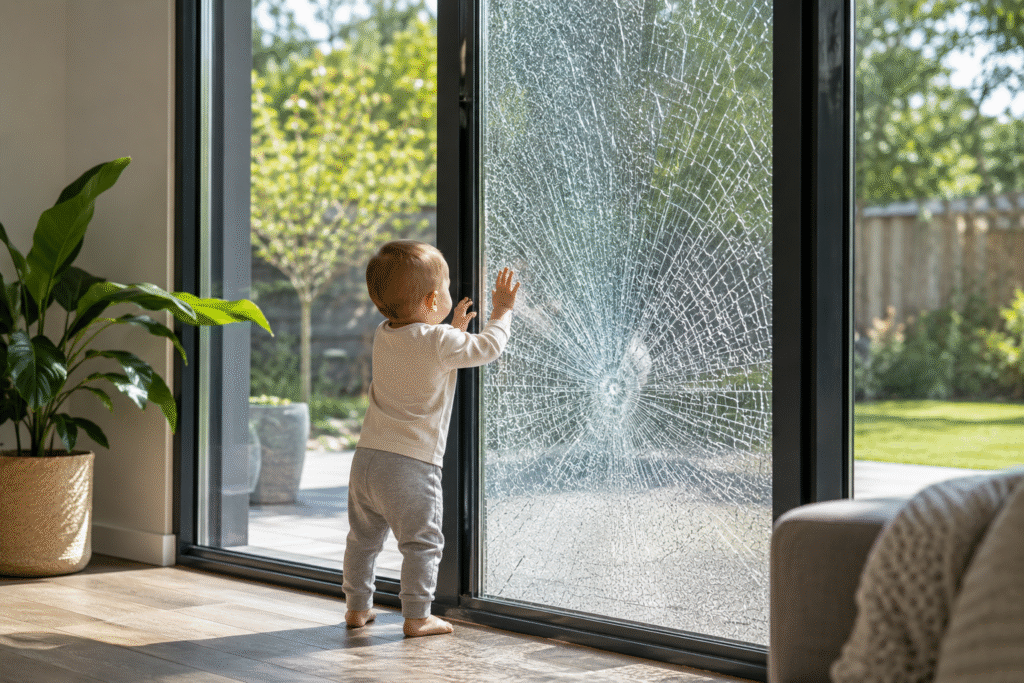
Have you ever wondered why some windows and doors use special glass instead of regular panes? If you’re building, renovating, or replacing glass in a home or business, safety glass isn’t optional in many spots. Building codes require it in specific locations to protect people from injury if the glass breaks. Here’s what you need to know before your next project.
What Is Safety Glass?
Safety glass is a type of glass designed to reduce injury risk when it breaks. Unlike regular annealed glass, which shatters into sharp shards, safety glass either breaks into small, dull pieces or stays intact after cracking. This design makes it a critical safety feature in homes, offices, schools, and other buildings.
There are two main types of safety glass used in construction today: tempered and laminated.
Tempered Safety Glass Explained
Tempered safety glass goes through a heating and rapid cooling process. This process makes the glass about four times stronger than standard glass. If it does break, it crumbles into small, rounded pieces instead of jagged shards. That’s why you’ll often find tempered glass in shower doors, storefront windows, and glass tabletops.
Tempered glass is a strong choice for areas where impact is likely. It holds up well against everyday bumps, but it’s built to break safely if enough force is applied.
Laminated Safety Glass Explained
Laminated safety glass uses two or more layers of glass bonded together with a plastic interlayer. When this glass breaks, the pieces stick to the interlayer instead of scattering. This keeps the glass mostly intact, even after a crack forms.
Laminated glass is common in car windshields, skylights, and glass used in areas prone to severe weather. It also offers sound dampening and UV protection, making it a popular pick for both homes and commercial buildings.
Where Building Glass Codes Require Safety Glass
Building glass codes outline exactly where safety glass must be installed. These rules exist because certain locations carry a higher risk of impact or breakage. Common areas where codes require safety glass include:
- Shower and bathtub enclosures
- Entry doors and sidelights next to doors
- Windows near stairs or landings
- Glass within 24 inches of a door
- Windows close to the floor, especially in bedrooms
- Skylights and overhead glazing
If you’re planning a renovation or new build in Marietta, checking local glass codes early can save time and prevent costly changes later. A contractor or glass specialist can confirm exactly which areas of your project require safety glass.
Why Safety Glass Matters for Homes and Businesses
Safety glass isn’t just about meeting code. It protects the people inside a building from serious injury. It also helps property owners avoid liability issues that can come from using the wrong type of glass in a high-risk area.
For business owners, safety glass adds another layer of protection. Storefronts, office partitions, and entry doors see heavy daily use. Using the right glass type here reduces the risk of accidents and keeps a property compliant with local codes. If you manage a commercial property, it’s worth reviewing your commercial glass services options to make sure every entry point and window meets current standards.
When to Replace Glass With a Safety-Rated Option
Older homes and buildings often have glass that doesn’t meet current safety standards. If you notice cracked, foggy, or outdated glass near a door, stairway, or bathroom, it may be time for an upgrade. Replacing older panes with tempered or laminated glass brings a property up to code and adds peace of mind. Learn more about your options on our glass replacement page.
Frequently Asked Questions
Is safety glass required in all windows?
No. Safety glass is only required in specific locations, like near doors, stairs, and bathtubs. Most standard windows don’t need it unless they’re within a few feet of the floor or a walking surface.
What’s the difference between tempered and laminated glass?
Tempered glass breaks into small, rounded pieces. Laminated glass stays mostly intact because the pieces stick to an inner plastic layer. Both are considered safety glass, but they’re used in different situations.
How do I know if my current glass meets safety codes?
Look for a small etched mark in the corner of the glass. This mark usually shows the manufacturer and safety rating. If you don’t see one, a glass professional can inspect the panel and let you know if it needs replacing.
Ready to Bring Your Property Up to Code?
Whether you’re building new or updating an older property, getting the right glass in the right spot matters. Lone Star Glass Inc. can help you identify which areas of your home or business need safety glass and handle the installation from start to finish. Call today to schedule a consultation or request a free quote.
Posted on July 22, 2026 | Published by Ignite Local | Related Local Business